
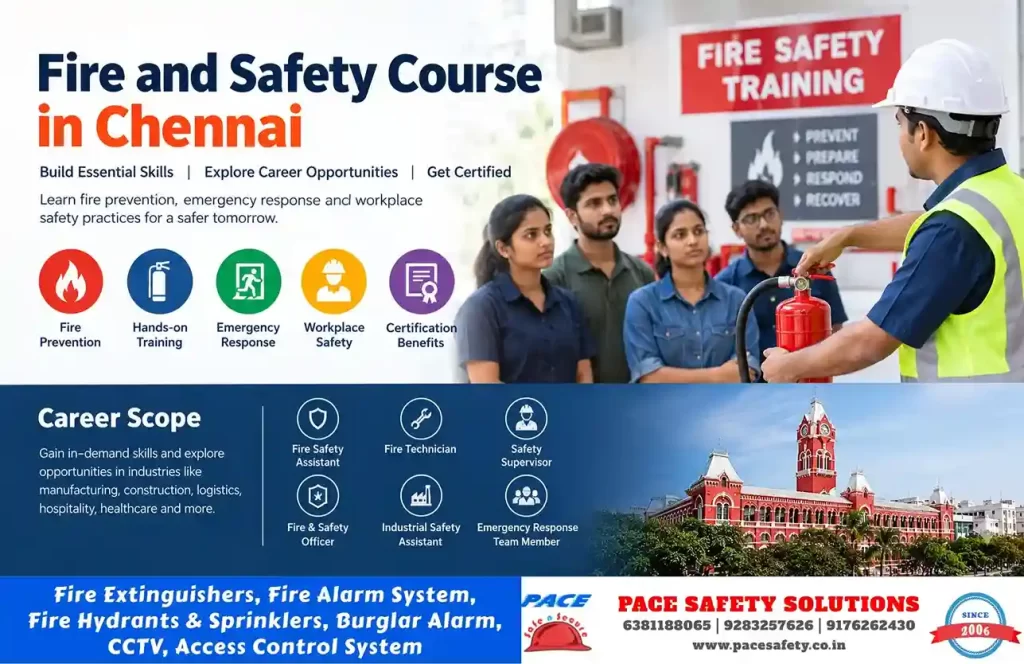
Fire and Safety Course in Chennai: Skills, Career Scope, and Certification Benefits
Fire safety is an important part of protecting people, property, and workplaces. Knowing how to prevent fires and respond to emergencies can help protect lives and property. A Fire and Safety Course in Chennai introduces learners to essential safety practices, fire prevention methods, emergency response procedures, and workplace risk management. For people looking to develop these skills, a fire and safety course in Chennai can be a useful step towards exploring opportunities in the safety sector.
Pace Safety Solutions focuses on fire safety solutions that support safer workplaces and buildings. Understanding the importance of fire safety training can help students, job seekers, and working professionals make informed decisions about their learning and career goals.
What Is a Fire and Safety Course?
A Fire and Safety Course teaches learners how to identify fire hazards, understand fire prevention methods, use suitable firefighting equipment, and follow emergency procedures. Depending on the programme, the training may include classroom learning, demonstrations, practical exercises, and safety assessments.
A fire safety course can introduce important topics such as fire behavior, extinguisher types, evacuation procedures, workplace hazards, and emergency planning. Some programmes also cover industrial safety, basic risk assessment, and incident reporting.
Before enrolling, learners should check the course syllabus, entry requirements, duration, practical training arrangements, and the recognition of the certificate offered. These details can vary between training providers and programmes.
Important Skills You Can Learn
A good fire and safety training programme helps learners develop practical knowledge that can be useful in different working environments.
1. Fire Prevention and Hazard Identification
Understanding how fires start is an essential safety skill. Learners can study common fire hazards, including faulty electrical equipment, flammable materials, unsafe storage practices, and poor housekeeping. Identifying these risks early can help organizations take preventive action.
2. Fire Extinguisher Handling
Fire extinguisher training introduces learners to different extinguisher types and their suitable applications. Participants can learn about equipment inspection, safe handling, and the importance of choosing the correct extinguisher for a particular fire.
Practical demonstrations should be conducted under appropriate supervision and in controlled conditions. Using the wrong extinguisher can increase danger, particularly in electrical or flammable-metal fires.
3. Emergency Response and Evacuation
During an emergency, clear instructions and quick decisions are important. Emergency response training can teach learners how to raise an alarm, follow evacuation plans, identify exit routes, and understand their responsibilities during an incident.
4. Workplace Safety Awareness
Workplace safety training helps learners recognize unsafe conditions and understand basic preventive measures. Depending on the programme, this may include personal protective equipment, hazard reporting, emergency communication, and safe working practices.
5. Risk Assessment and Communication
Some programmes introduce fire risk assessment, emergency planning, and incident documentation. Clear communication is also essential because safety personnel may need to guide workers, report hazards, and coordinate with emergency responders.
Career Scope After a Fire and Safety Course
Fire prevention and workplace safety are important across many industries. As a result, people with suitable training may explore different entry-level and specialized roles, depending on their qualifications, practical experience, and employer requirements.
Possible career paths include:
- Fire safety assistant: Supports routine safety checks and fire prevention activities.
- Fire technician: May assist with fire safety equipment inspection, installation, or maintenance, subject to the required technical skills.
- Safety supervisor: Helps monitor workplace safety practices and report hazards.
- Fire and safety officer: Supports fire prevention, emergency preparedness, safety inspections, and incident reporting where appropriately qualified.
- Industrial safety assistant: Helps implement safety procedures in factories and industrial facilities.
- Emergency response team member: Supports an organization’s emergency arrangements after suitable training.
Career opportunities may be available in manufacturing, construction, logistics, hospitality, healthcare, commercial buildings, and facility management. However, completing a short course does not automatically qualify someone for every safety position. Employers may require specific educational qualifications, recognized certifications, work experience, or additional technical training.
People searching for fire and safety jobs in Chennai should review individual job descriptions to understand the qualifications and practical experience required.
Benefits of Fire Safety Certification
A relevant fire and safety certification can provide several benefits when the programme offers suitable training and assessment.
Improved safety knowledge: Learners gain an understanding of fire hazards, prevention measures, and emergency procedures.
Practical skill development: Programmes with supervised practical sessions can help participants become more familiar with safety equipment and emergency response techniques.
Career preparation: A relevant certificate can support applications for positions that accept that particular qualification.
Better workplace awareness: Trained employees may be better prepared to recognize hazards and follow established safety procedures.
Professional development: Working professionals can use additional training to strengthen their existing safety knowledge and identify areas for further learning.
When comparing fire safety certification courses, verify the issuing organization, assessment method, course content, and whether employers or relevant authorities recognize the qualification for your intended role.
Who Should Consider Fire and Safety Training?
A fire and safety course may suit students, fresh graduates, job seekers, industrial workers, construction personnel, security staff, and employees responsible for workplace safety.
Facility managers and business owners may also benefit from suitable fire safety training for themselves or their teams. However, management-level safety responsibilities may require more advanced qualifications and relevant experience.
For beginners, the first step is to identify a programme that matches their educational background, career interests, and available learning time.
How to Choose a Fire and Safety Course in Chennai
Choosing the right programme requires more than comparing course fees. Consider the following factors before enrolling:
- Course syllabus: Check whether the topics match your learning and career goals.
- Practical training: Ask whether demonstrations and supervised exercises are included.
- Eligibility: Confirm the minimum educational qualifications and other entry requirements.
- Duration and fees: Request clear details about the course schedule, total cost, and any additional charges.
- Certification: Verify the certificate’s validity, issuing body, and acceptance for the roles you want to pursue.
- Career guidance: Ask whether the provider offers career advice or placement assistance, and clarify what that support includes.
These checks can help you select a suitable fire and safety training institute in Chennai without relying on unsupported promises about jobs or salaries.
Why Fire Safety Training Matters for Businesses
Fire safety is not only an individual career skill; it is also an important part of organizational preparedness. Offices, factories, schools, hospitals, and commercial buildings need appropriate fire prevention measures, maintained equipment, clear evacuation arrangements, and trained personnel.
Businesses can strengthen workplace preparedness by arranging suitable training, conducting emergency drills, maintaining safety records, and reviewing fire hazards regularly. Training should complement the organization’s wider fire safety plan and applicable legal requirements.
Pace Safety Solutions supports fire safety needs through its services. Organizations interested in equipment-related requirements can explore the Pace Safety Solutions website to learn more about the available solutions.
FAQs
1. Who can enroll in a Fire and Safety Course?
Eligibility depends on the programme. Some introductory courses accept beginners, while advanced qualifications may require specific educational backgrounds or experience.
2. What is the duration of a fire safety course?
Course duration varies according to the syllabus, training level, and certification requirements. Confirm the schedule directly with the provider.
3. Can a fire and safety course help with employment?
It can support career preparation, but employment depends on the qualification, practical skills, experience, and requirements of individual employers.
4. What skills are covered in fire safety training?
Common topics include fire prevention, extinguisher awareness, evacuation procedures, hazard identification, and emergency response.
Conclusion
A Fire and Safety Course can help learners build valuable knowledge about fire prevention, workplace hazards, and emergency preparedness. It may also support career development for people interested in industrial safety, fire prevention, and related roles.
Before enrolling, compare course content, practical training, eligibility, and certification recognition carefully. With suitable training and continued learning, individuals can develop the skills needed to contribute to safer workplaces and buildings.