
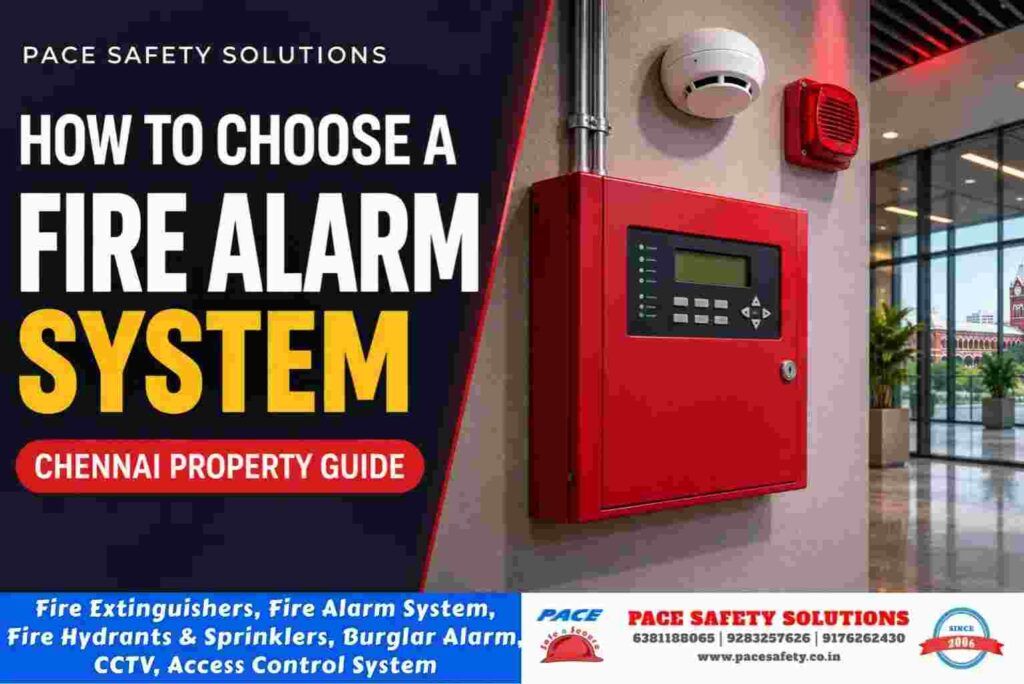
How to Choose the Best Fire Alarm System for Your Chennai Property
Fire safety is an important consideration for every building, whether it is a home, office, factory, school, hospital, or commercial establishment. A fire can spread quickly and cause serious damage to property and put lives at risk. Installing a suitable Fire Alarm System in Chennai can help detect early signs of fire and alert people before the situation becomes more dangerous. However, choosing the right system requires an understanding of your building, safety requirements, and available technologies.
For property owners and businesses, selecting the right fire alarm is an important step towards creating a safer environment. Pace Safety Solutions offers fire safety solutions to help different types of properties address their fire protection needs.
What Is a Fire Alarm System and Why Is It Important?
A fire alarm system is a safety arrangement designed to identify signs of fire, such as smoke or unusual heat, and alert occupants through audible or visual warnings. Depending on the design, the system may also communicate with a monitoring facility or activate other connected safety equipment.
A properly planned fire detection system can help occupants recognise potential danger, follow evacuation procedures, and respond quickly. It is particularly important in buildings where many people work, study, live, or visit every day.
Installing a suitable fire safety system for buildings also supports overall emergency preparedness and helps organisations meet applicable fire safety requirements.
Types of Fire Alarm Systems
Before selecting a system, it is important to understand the common options available. Each type has different features and is suitable for different building requirements.
1. Conventional Fire Alarm System
A conventional fire alarm system divides a building into different detection zones. When a detector identifies smoke or heat, the control panel indicates the affected zone.
This system may be suitable for smaller buildings, shops, offices, and properties with straightforward layouts. It can be a practical option where identifying the general location of an alarm is sufficient.
2. Addressable Fire Alarm System
An addressable fire alarm system assigns an individual identification point to each connected detector or device. This allows the control panel to indicate the specific device that has detected a possible fire.
It is commonly considered for larger buildings, hospitals, commercial complexes, and industrial facilities where identifying the exact alarm location can support faster investigation and response.
3. Wireless Fire Alarm System
A wireless fire alarm system uses wireless communication between compatible devices and the control panel instead of relying entirely on traditional signal cables.
It may be useful in selected existing buildings, renovated properties, or locations where installing additional wiring is difficult. However, signal reliability, device compatibility, battery condition, and building layout must be evaluated before installation.
Important Factors to Consider Before Choosing a Fire Alarm
Choosing a fire alarm system should not depend only on price or brand. Consider the following factors before making a decision.
1. Understand Your Property Type
Every property has different fire risks. A residential building may have different requirements from a factory, warehouse, hotel, or hospital.
For example, industrial properties may need a system designed around machinery, storage materials, and operational activities. Commercial offices may require suitable detection and alert arrangements across multiple floors.
Understanding the building’s purpose is the first step towards selecting an appropriate solution.
2. Check Building Size and Layout
The size, number of floors, room arrangement, ceiling height, and occupancy level can influence system selection.
Larger buildings may require more detectors, notification devices, and a suitable fire alarm control panel. A professional assessment can help determine appropriate device locations and system coverage.
3. Select Suitable Smoke and Heat Detectors
Smoke detectors and heat detectors serve different purposes.
- Smoke detectors: Identify smoke particles and are commonly used in offices, corridors, and other suitable indoor spaces.
- Heat detectors: Respond to a rise in temperature or a specified heat condition. They may be suitable for certain kitchens, industrial areas, and environments where smoke detectors could produce unwanted alarms.
The correct detector should be selected according to the environmental conditions and fire risks in each area.
4. Consider System Features
Look for features that match your property’s safety requirements. These may include audible alarms, visual indicators, backup power, fault monitoring, zone identification, and integration with other safety equipment.
A suitable system should be easy to monitor, operate, inspect, and maintain.
5. Compare Installation and Maintenance Requirements
Professional fire alarm installation in Chennai is important because incorrect detector placement or poor system configuration can affect performance.
Before selecting a provider, ask about installation procedures, testing, maintenance support, replacement components, and service availability. Regular fire alarm maintenance helps identify faults and keeps the equipment in suitable working condition.
How Much Does a Fire Alarm System Cost in Chennai?
The fire alarm system cost in Chennai depends on several factors, including building size, system type, number of detectors, control panel capacity, wiring requirements, and installation complexity.
A conventional system may have different costs from an addressable or wireless solution. Additional features, integration requirements, and ongoing maintenance can also influence the overall investment.
Instead of selecting a system based only on the lowest quotation, request a site assessment and compare the equipment specifications, installation scope, testing, warranty, and maintenance support.
Why Professional Fire Alarm Installation Matters
A fire alarm system is only useful when it is correctly designed, installed, and tested. Professional installation services help ensure that detectors, control panels, and notification devices are positioned and configured according to the building’s requirements.
After installation, the system should undergo appropriate testing to check device communication, alarm notifications, power backup, and fault indications.
Property owners should also arrange periodic fire alarm inspection and testing based on manufacturer instructions and applicable safety standards. A fire alarm annual maintenance contract (AMC) can help organisations plan routine inspections, servicing, and necessary repairs.
Which Properties Need Fire Alarm Systems?
Different types of properties can benefit from suitable fire detection and alarm arrangements:
- Residential buildings: Apartments, housing communities, and individual properties.
- Corporate offices: Workspaces, meeting rooms, and multi-floor office buildings.
- Factories and industries: Production units, machinery areas, and storage facilities.
- Educational institutions: Schools, colleges, laboratories, and administrative buildings.
- Hospitals: Patient areas, corridors, laboratories, and support facilities.
- Hotels and restaurants: Guest rooms, kitchens, dining areas, and service spaces.
- Warehouses: Storage areas containing materials and commercial goods.
The system should always be selected according to the specific fire risks, building design, occupancy, and applicable regulations.
Why Choose Pace Safety Solutions?
Choosing a dependable fire safety service provider is an important part of protecting your property. Pace Safety Solutions offers fire alarm solutions, including conventional, addressable, and wireless systems, along with installation and maintenance support.
Whether you manage a residential building, corporate office, commercial establishment, or industrial facility, understanding your property’s requirements can help you select a suitable fire detection solution.
Explore the Fire Alarm System in Chennai services offered by Pace Safety Solutions to learn more about available options. You can also visit the Fire Alarm System Suppliers in Chennai page for related products and services.
Frequently Asked Questions
1. Which fire alarm system is best for commercial buildings?
Conventional and addressable systems are common options. The right choice depends on building size, layout, occupancy, and safety requirements.
2. What is the difference between conventional and addressable fire alarm systems?
A conventional system identifies the affected zone, while an addressable system can identify the individual device that triggers an alarm.
3. How often should a fire alarm system be inspected?
Inspection and testing schedules should follow manufacturer recommendations, applicable standards, and local fire safety requirements.
4. Are wireless fire alarm systems suitable for homes?
They can be suitable for certain residential properties, provided the system is compatible with the building layout and installed correctly.
5. Why is professional fire alarm maintenance important?
Regular maintenance helps identify faults, damaged components, and communication problems before they affect system performance.
Conclusion
Choosing the right fire alarm system is an important investment in the safety of your property and its occupants. Understanding different system types, evaluating building requirements, selecting suitable detectors, and arranging professional installation can help improve fire detection and emergency preparedness.